Most calls start the same way: a homeowner in The Reserve at Woodland Park or Chapel Creek notices the pool floor feels sandpaper-rough underfoot, or there's a gray chalky film that won't brush off, or a rust-colored…
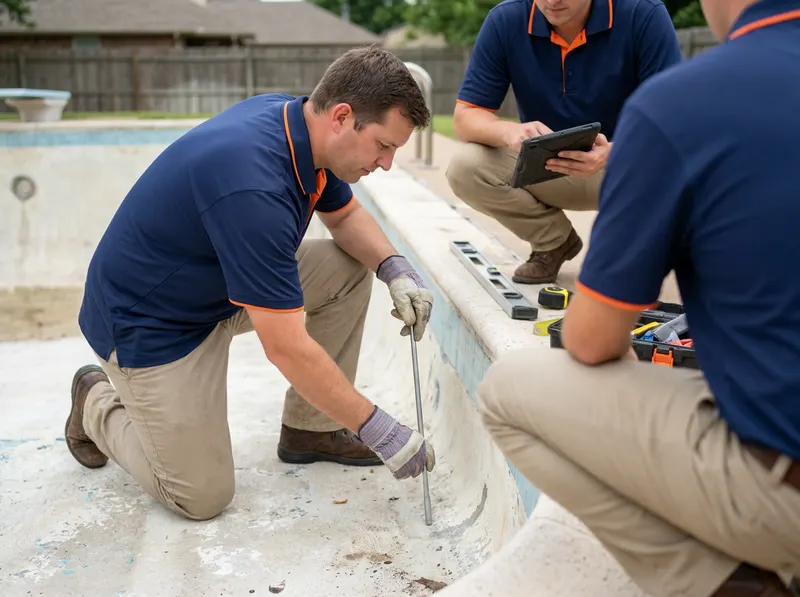
Most calls start the same way: a homeowner in The Reserve at Woodland Park or Chapel Creek notices the pool floor feels sandpaper-rough underfoot, or there's a gray chalky film that won't brush off, or a rust-colored stain has spread along the steps since spring. The question underneath all of it is the same, is this a surface problem or a structural one? A diagnostic inspection exists to answer that specific question before a dollar figure enters the conversation. The inspector walks the shell, checks the plaster or gunite finish for etching and delamination, looks at expansion joints and tile lines for movement, and inspects any visible rebar exposure at the waterline or steps, a sign the surface has worn past cosmetic. Pools built in the 1990s and early 2000s around Jenks, many now 15-25 years past their original finish, tend to show this pattern in predictable spots: steps, the shallow-end floor, and around return jets, where water chemistry stress concentrates over time.
The trade-off homeowners are actually weighing is time and money now versus risk later. A surface that's chalky but structurally sound can sometimes be addressed with a patch or a chemical/mechanical resurfacing of the existing plaster, less disruptive, shorter downtime, lower cost. A surface with rebar exposure, spreading cracks through the shell, or delamination (plaster separating from the gunite base) is a different category of problem; patching it delays the real fix and can mean redoing work within a season or two. The inspection is what separates those two paths with something more concrete than a guess, it's why the diagnosis happens first and gets written down before any resurfacing quote is discussed, not folded into a sales pitch where the incentive runs the other way.
Location matters here in a practical sense. Pools in Southern Trails and Shadow Creek sit on different soil and drainage conditions than those closer to the Arkansas River corridor near Riverwalk Crossing, and shell movement from soil settling shows up differently depending on lot grading. An inspection accounts for what's actually in front of it, the specific pool, the specific wear pattern, the specific age, rather than applying a blanket recommendation. Homeowners in The Estates at Jenks or Ki Kanoni with older plaster pools often assume rough texture automatically means full resurface; sometimes it does, sometimes it's a chemical imbalance that etched the surface and a lighter fix applies. The inspection is the only way to know which one it is before money changes hands.
What comes out of the visit is a written note on condition, not a verbal impression, not a same-day upsell. That written record is what a homeowner can use to compare against a second opinion if they want one, or simply to understand what they're looking at before deciding whether to move forward with a patch, a partial resurface, or a full strip-and-refinish. Call to schedule an inspection; most residential pools throughout Jenks can be assessed within one visit.
Every job gets a firm, written price after a free on-site visit.
Tell us about your pool diagnostic inspection job in Jenks and we'll send a clear, written quote, usually the same day.
 Jenks Pool Resurfacing Contractor Co.